



On September 25, MOBILIsE proudly took part in the European Researchers’ Night (ERN) 2026 at i3S, joining a celebration of science, research, and innovation. Described as the largest-ever ERN event at the Institute, this year’s edition welcomed around 1,000 visitors for an evening dedicated to scientific discovery, knowledge sharing, and engagement with the research community (i3s.up.pt/news).
For the 4th time, MOBILIsE participated in this remarkable event, bringing science closer to the public and highlighting the vital role of research in shaping a healthier future. At the heart of the engagement was the MOBILIsE booth, where visitors could discover how (bio)materials and nanotechnology can address medical challenges and improve human health. Through a range of interactive, hands-on activities developed by different research groups within the MOBILIsE project, visitors explored diverse research approaches. They discovered how these innovative technologies can be applied to healthcare, turning scientific advances into potential solutions for real-world medical needs:
> The Molecular Biomaterials’ (MOBI) Group, led by the MOBILIsE ERA chair holder Helena Azevedo, highlighted how peptide design can be used to create smart hydrogels with potential applications in disease treatment and tissue regeneration, illustrating the journey from fundamental research to real-world healthcare solutions.
>The NanoBiomaterials for Targeted Therapies (nBTT) Group, led by Ana Paula Pêgo, showcased a range of in vitro systems used to study neurobiology, along with nanoscale-engineered biomaterials featuring controlled architectures and functionalities designed to promote nervous tissue regeneration.
>The BioEngineered Surfaces (BeSurf) Group, led by the MOBILIsE coordinator Cristina Martins – organised different activities, showcasing innovative biomaterial-based strategies for preventing and treating infections. At the “The Functional Biomaterials to Fight Infections” activity, visitors explored alternatives to antibiotics with an interactive target-shooting game and discovered translational biomaterials, including colour-changing shoe insoles and fibre-based wound dressings for infection monitoring.
>The Bioengineered 3D Microenvironments (BeMic) Group, led by Cristina Barrias, featured three interactive stations that introduced visitors to cutting-edge approaches for recreating vascularized tissues. Participants explored 3D microphysiological platforms that mimic vascularized microenvironments, took part in a hands-on activity encapsulating microspheres and spheroids within hydrogels, and designed biomimetic matrices that support cell interactions and the diffusion of essential molecules.
The ERN takes place every year, on the last Friday of September, when universities and research institutes across Europe open their doors and share their work through presentations, experiments, games, discussions and other interactive formats. The event targets the general public, addressing and attracting people regardless of the level of their scientific background, with a special focus on young people and their families, pupils and students.
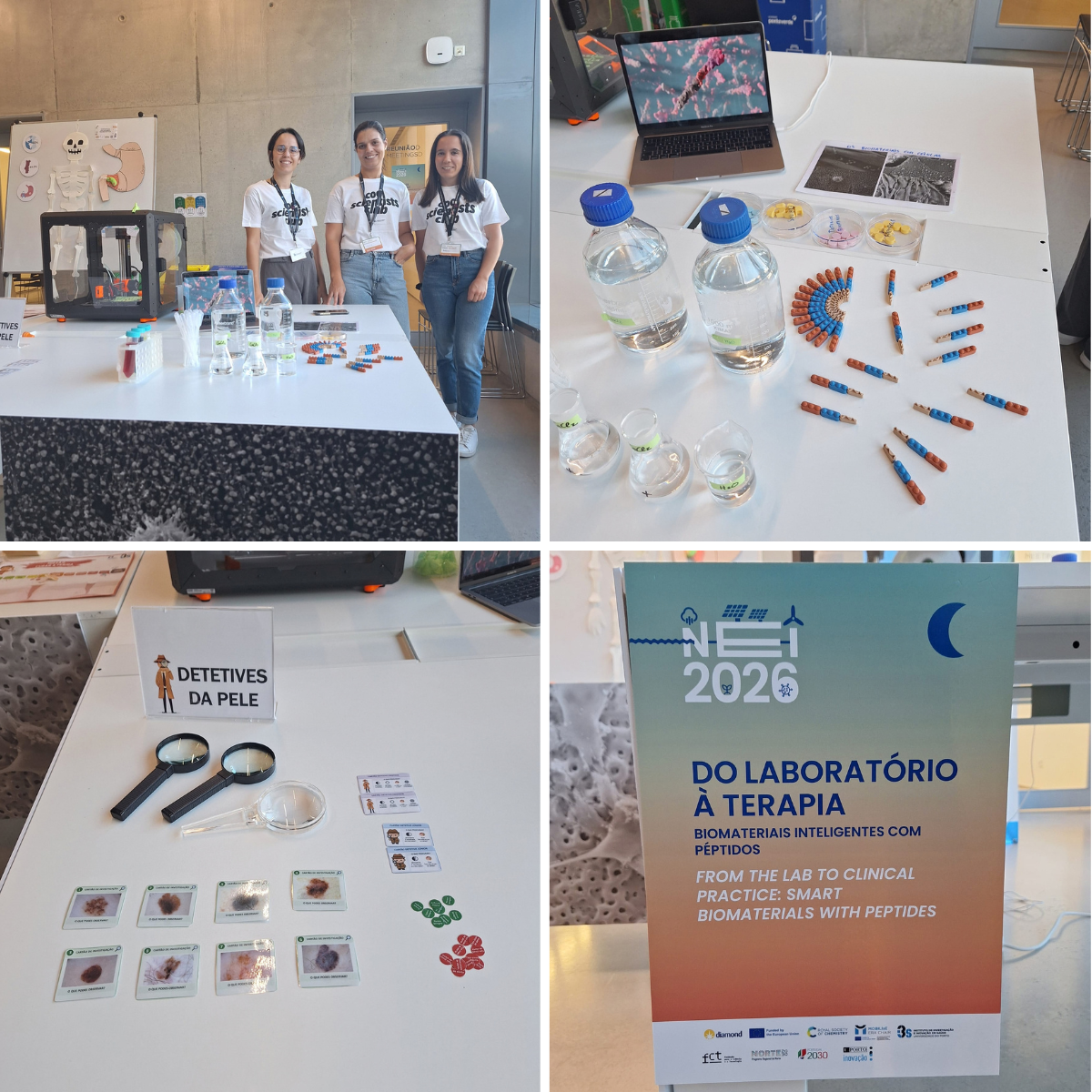
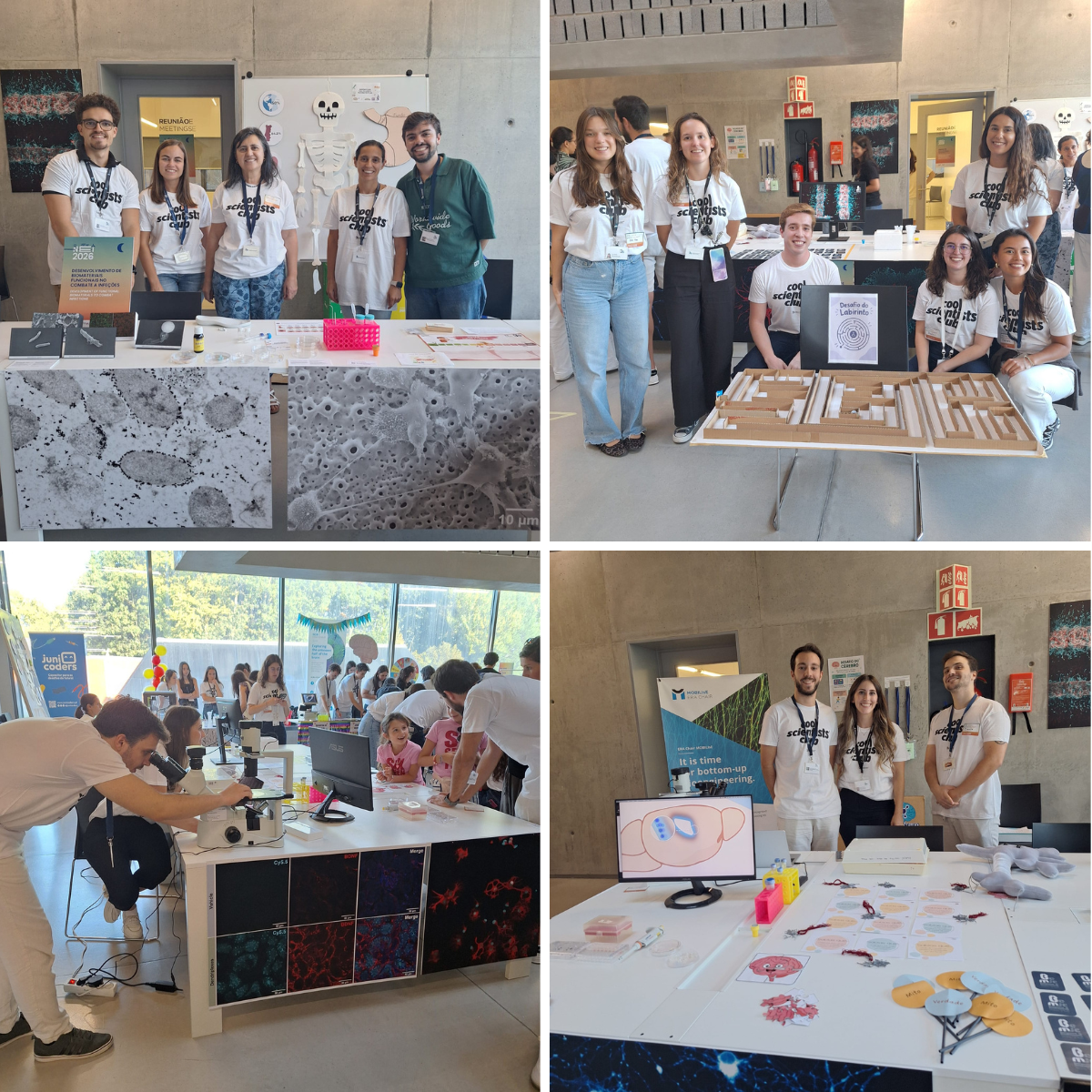
Groups from MOBILIsE at the European Researchers’ Night 2026